
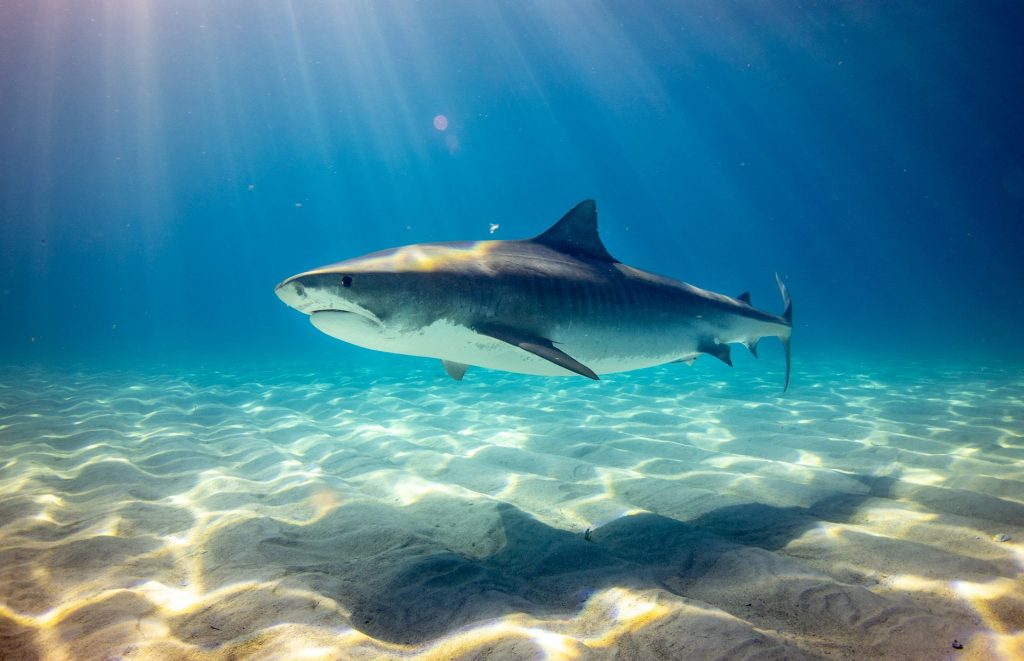
Why the Ocean Needs Sharks
If you remove the top predator from any environment, the entire system destabilizes. Here is what sharks do for our oceans:
- Maintaining the Food Web: Sharks prey on the sick, slow, and weak individuals of mid-level predator species. This prevents these mid-level predators from overpopulating and wiping out smaller, herbivorous fish.
- Protecting Coral Reefs: By keeping mid-level predators (like groupers) in check, sharks indirectly protect the herbivorous fish (like parrotfish) that eat algae. Without sharks, algae overgrows, suffocating coral reefs.
- Combating Climate Change: Healthy coral reefs and seagrass beds—which sharks protect—are incredible carbon sinks. Furthermore, the mere presence of sharks terrifies grazing marine animals (like sea turtles and dugongs), preventing them from overgrazing vital underwater meadows.
- Boosting Local Economies: A live shark is worth vastly more than a dead one. Shark diving ecotourism generates hundreds of millions of dollars globally every year.
The Slaughter Beneath the Surface
The sheer scale of shark killing is staggering. An estimated 73 to 100 million sharks are killed by humans every single year.
| Primary Threat | Main Causes | Impact on Sharks |
|---|---|---|
| Shark Finning | Demand for shark fin soup (a status symbol in some cultures) | Fishermen slice off fins and throw the living shark back to drown or bleed out. |
| Bycatch | Unregulated commercial fishing (longlining, trawling) | Millions of sharks are accidentally caught in nets meant for tuna or swordfish and discarded dead. |
| Ocean Pollution | Plastic waste, agricultural runoff, heavy metals | Ingestion of plastics and toxic buildup in shark tissue affects reproduction and health. |
| Climate Change & Acidification | Rising ocean temperatures, increased CO2 absorption | Alters shark hunting grounds and impairs their ability to smell and detect prey. |
Turning the Tide: Shark Conservation Strategies
The tide is slowly turning as global awareness grows, but aggressive action is required to save these ancient predators.
- Establishing Shark Sanctuaries: Countries like Palau, the Bahamas, and the Maldives have declared their entire territorial waters as shark sanctuaries, banning all commercial shark fishing.
- Banning the Fin Trade: A growing number of countries, including the US, UK, and Canada, have banned the sale and possession of shark fins.
- Improving Fishing Gear: Conservationists are working with commercial fisheries to implement “circle hooks” and special net designs that significantly reduce shark bycatch.
- Public Rebranding: Campaigns are actively working to change the public perception of sharks from mindless killers to vulnerable, vital wildlife.
How You Can Be a Shark Ally
- Say No to Shark Fin Soup: Never consume it, and politely educate friends and family about the cruel reality behind the dish.
- Choose Sustainable Seafood: Download the Monterey Bay Aquarium’s Seafood Watch app to ensure the fish you buy is caught using methods that don’t harm sharks.
- Reduce Your Plastic Footprint: Keep plastics out of the ocean to protect sharks and their prey from ingestion and entanglement.
- Support Shark Conservation NGOs: Organizations like Oceana, Shark Trust, and PADI’s AWARE Foundation are fighting legal battles and cleaning up oceans.
Conclusion
A ocean without sharks is a dying ocean. If we allow these apex predators to vanish, the ripple effects will be felt all the way up the food chain—impacting the billions of people who rely on the ocean for food and their livelihoods. It is time to drop the myths, face the facts, and give sharks the respect and protection they so desperately need.