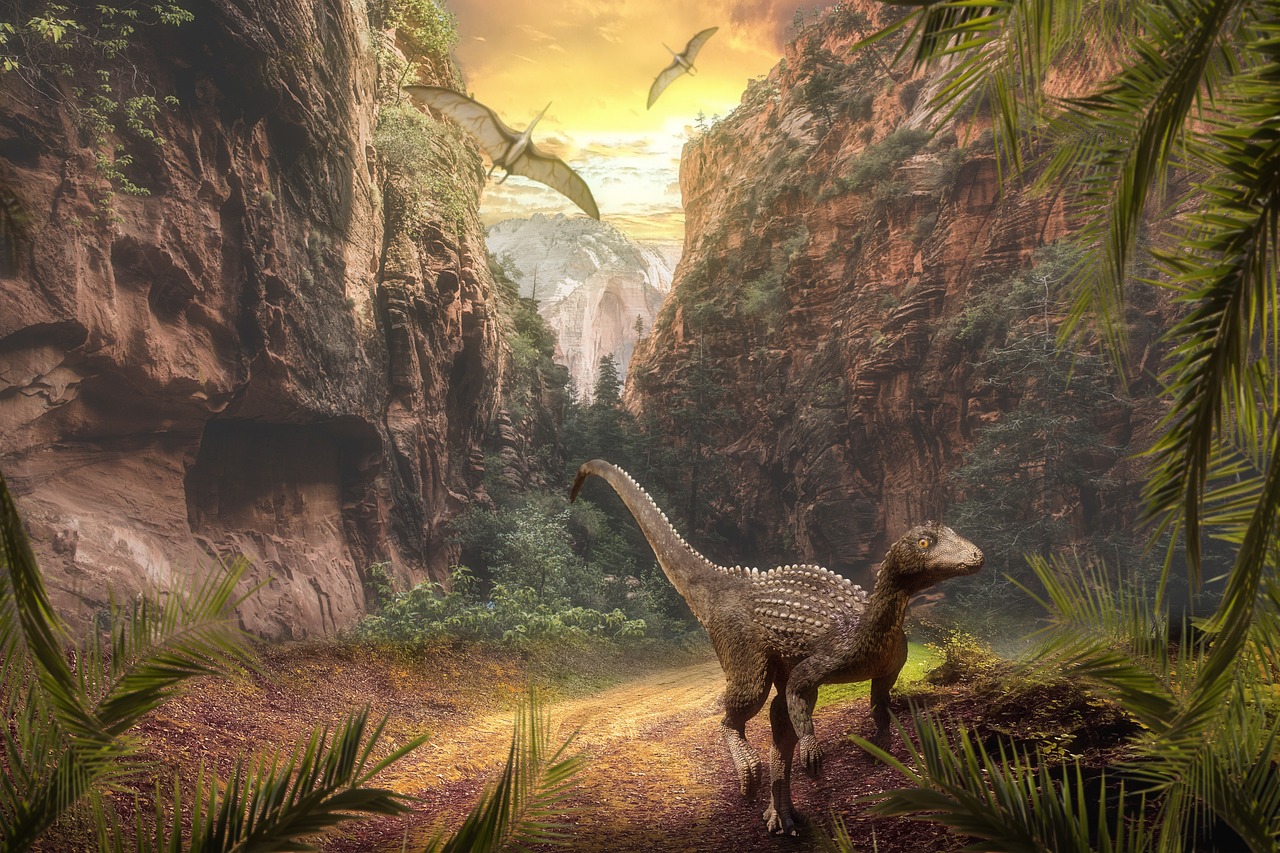
Myth vs. Reality: The Dinosaur Renaissance
Modern science has flipped the script on almost everything we thought we knew about dinosaurs.
- Myth: They were scaly lizards. Reality: Most theropod dinosaurs (the two-legged meat-eaters like T-Rex and Velociraptor) had feathers. In fact, birds aren’t just related to dinosaurs; they are dinosaurs.
- Myth: They were cold-blooded and sluggish. Reality: Evidence shows many dinosaurs were warm-blooded (endothermic), capable of high-speed chases and high metabolisms.
- Myth: T-Rex had terrible vision. Reality: Jurassic Park lied to you. T-Rex had excellent binocular vision, likely better than a hawk’s, making it a lethal apex predator, not a scavenger relying only on movement.
- Myth: Dinosaurs were all gigantic. Reality: The average dinosaur was about the size of a turkey or a large dog. The giant sauropods were the exceptions, not the rule.
The Three Ages of Dinosaurs
The Mesozoic Era—the “Age of Reptiles”—lasted for roughly 186 million years. It is broken down into three distinct periods, each dominated by different groups of dinosaurs.
| Era Period | Timeframe | Key Characteristics & Famous Dinosaurs |
|---|---|---|
| Triassic | 252 – 201 Million Years Ago | The dawn of the dinosaurs. They were small, bipedal, and lived alongside giant crocodile-like reptiles. (Eoraptor) |
| Jurassic | 201 – 145 Million Years Ago | The rise of the giants. Massive long-necked sauropods dominated the land. (Brachiosaurus, Allosaurus, Stegosaurus) |
| Cretaceous | 145 – 66 Million Years Ago | The most diverse period. Features the famous horned and duck-billed dinosaurs, and the apex predators. (T-Rex, Triceratops, Velociraptor) |
The Day the Earth Shook
66 million years ago, an asteroid the size of Mount Everest slammed into what is now the Yucatán Peninsula in Mexico. The impact released energy equivalent to 10 billion atomic bombs.
But it wasn’t the blast that killed the non-avian dinosaurs—it was the aftermath. The impact vaporized rock, sending massive amounts of sulfur and soot into the atmosphere, blocking out the sun. The Earth plummeted into an “impact winter.” Plants died, herbivores starved, and the predators followed shortly after.
Why Dinosaurs Still Matter
Why do we care about animals that died 66 million years ago? Because studying their extinction is crucial to our own survival.
We are currently living through the “Sixth Mass Extinction,” driven by human activity rather than an asteroid. By studying how ecosystems collapsed during the end-Cretaceous period, scientists can better predict how our modern ecosystems will respond to rapid climate change and habitat loss today.
Furthermore, dinosaurs remind us of the impermanence of life. They ruled the Earth for 180 million years; modern humans have been here for roughly 300,000. Dinosaurs teach us a vital lesson in humility: no species, no matter how dominant, lasts forever.
Conclusion
Dinosaurs are no longer just dusty bones in a museum. They are vibrant, feathered, active animals that dominated a dynamic Earth. By continuing to dig up their secrets, we not only satisfy our childhood curiosity but uncover the deep history of the planet we currently call home.