
Introduction
Community engagement is an important approach to addressing social, environmental, and economic challenges. It involves building meaningful relationships between community members and organisations to identify common concerns and develop effective solutions. Rather than treating people as passive recipients of services, community engagement recognises them as active partners in decision-making and development. Their experiences, knowledge, and perspectives can help ensure that projects respond to local needs and priorities. <Cite refs={[“turn341453search1″,”turn341453search4”]}/>
Importance of Community Engagement
Community engagement strengthens cooperation, mutual understanding, and trust among people. It provides opportunities for individuals from different backgrounds to share their opinions, express their concerns, and contribute to collective goals. Inclusive participation can also help identify problems that might otherwise be overlooked and improve the relevance of development programmes.
Furthermore, community engagement encourages shared responsibility. When people participate in planning and implementing activities, they can develop a stronger sense of ownership and become more committed to maintaining the results. Effective engagement requires transparent communication, mutual respect, and meaningful opportunities for participation. <Cite refs={[“turn341453search3″,”turn341453search13”]}/>
Community Engagement in Environmental Conservation
Community engagement is particularly important in environmental conservation and wildlife protection. Local communities often have valuable knowledge about nearby forests, rivers, wetlands, and animal populations. Their involvement can help researchers understand environmental changes, identify threats to wildlife, and develop conservation strategies suited to local conditions.
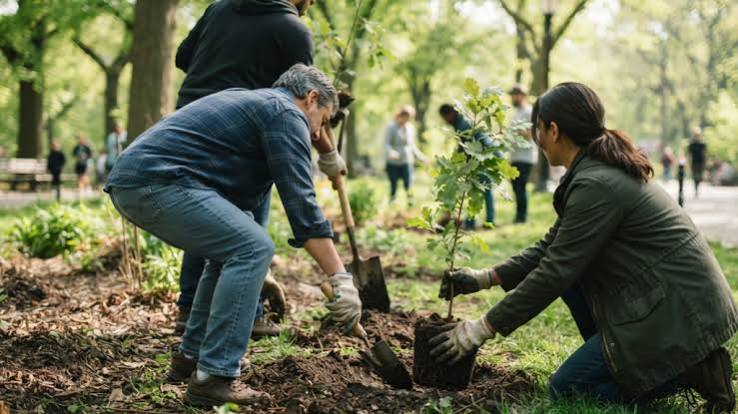
For example, community members can participate in tree-planting programmes, habitat restoration, wildlife monitoring, environmental education, and campaigns against illegal hunting. Researchers can collaborate with local residents to collect observations and share scientific findings in accessible language. These partnerships can connect scientific evidence with local knowledge and support more inclusive conservation practices. <Cite refs={[“turn341453search2″,”turn341453search10”]}/>
Strategies for Effective Community Engagement
Successful community engagement requires careful planning and continuous communication. First, project organisers should identify the needs, interests, and priorities of the community. Public meetings, interviews, surveys, and group discussions can provide opportunities for people to share their views.
Second, participation should be inclusive. Women, young people, older adults, disadvantaged groups, and other relevant community members should have fair opportunities to contribute. Third, researchers and organisations should communicate project objectives, responsibilities, expected outcomes, and limitations clearly.
Finally, community members should receive feedback about how their contributions are used and what results the project achieves. Evaluating outcomes and maintaining long-term partnerships can help strengthen trust and improve future activities. <Cite refs={[“turn341453search3″,”turn341453search6”]}/>
Challenges of Community Engagement
Despite its benefits, community engagement can face several challenges, including limited funding, lack of awareness, language barriers, unequal representation, and low levels of trust. Some individuals may be unable to participate because of work commitments, financial difficulties, or limited access to information.
These challenges can be addressed through accessible communication, flexible meeting arrangements, appropriate training, transparent decision-making, and respect for local culture. Organisations should also avoid assuming that a small group of representatives speaks for everyone. Continuous dialogue and fair representation are essential for building meaningful partnerships. <Cite refs={[“turn341453search3″,”turn341453search13”]}/>
Conclusion
Community engagement is a valuable process for promoting cooperation, participation, and sustainable development. By involving people in identifying problems, making decisions, and implementing solutions, communities can address shared challenges more effectively. In environmental conservation, meaningful engagement can connect local knowledge with scientific research and encourage collective responsibility for protecting natural resources. Long-term success depends on trust, inclusion, transparency, and respect for the voices of all relevant community members.